Pre-Listing Plumbing Checklist
What to Fix Before You List — and What to Skip
By Keether Merry, owner, Principled Plumbing Inc., Grass Valley, CA · September 13, 2026
Fix what leaks, drips, runs, or smells — those repairs are cheap, and buyers read them as neglect. Skip the repipe and the fixture upgrades; buyers discount them anyway. Document everything you do fix. And in California, an as-is sale does not excuse you from disclosing what you know.
I’ve been plumbing in Nevada County for 18 years, and I get called into a lot of houses three weeks before they hit the market. The sellers who do well have usually spent a few hundred dollars and a Saturday. The ones who lose money in escrow spent nothing, or spent thousands on the wrong thing. This is the pre-listing plumbing checklist I’d give a neighbor.
Should you fix plumbing problems before you list?
Yes for the small and visible, no for the large and speculative. The reason has less to do with the repair cost than with how buyers price uncertainty. A stain under a sink costs you a $180 supply line. To a buyer standing in your kitchen, it’s an unknown that could be anything.
That reaction isn’t irrational. Water damage and freezing made up 27.6% of all homeowners insurance losses in 2022, and the five-year average claim ran $13,954 (Triple-I, ISO/Verisk data 2018–2022). Buyers have either had that claim or know someone who has. When they see evidence of water where it shouldn’t be, they’re not picturing your $180 fix. They’re picturing the fourteen-thousand-dollar version.
So the rule isn’t “fix everything.” It’s: close the cheap open questions, price the expensive ones honestly, and don’t leave anything on the table for a buyer to imagine.
What should you always fix before listing?
Anything cheap, visible, and diagnosable in under ten minutes. These are the items a buyer’s inspector will photograph and a buyer will remember, and almost all of them are under a few hundred dollars.
- Active drips and running toilets. A faucet dripping once per second wastes more than 3,000 gallons a year, and the average household’s leaks account for over 10,000 gallons annually (EPA WaterSense). Ten percent of homes are losing 90 gallons a day or more. A running toilet is usually a $15 flapper.
- Slow drains. Snake them. A slow drain during a showing reads as a sewer problem whether or not it is one.
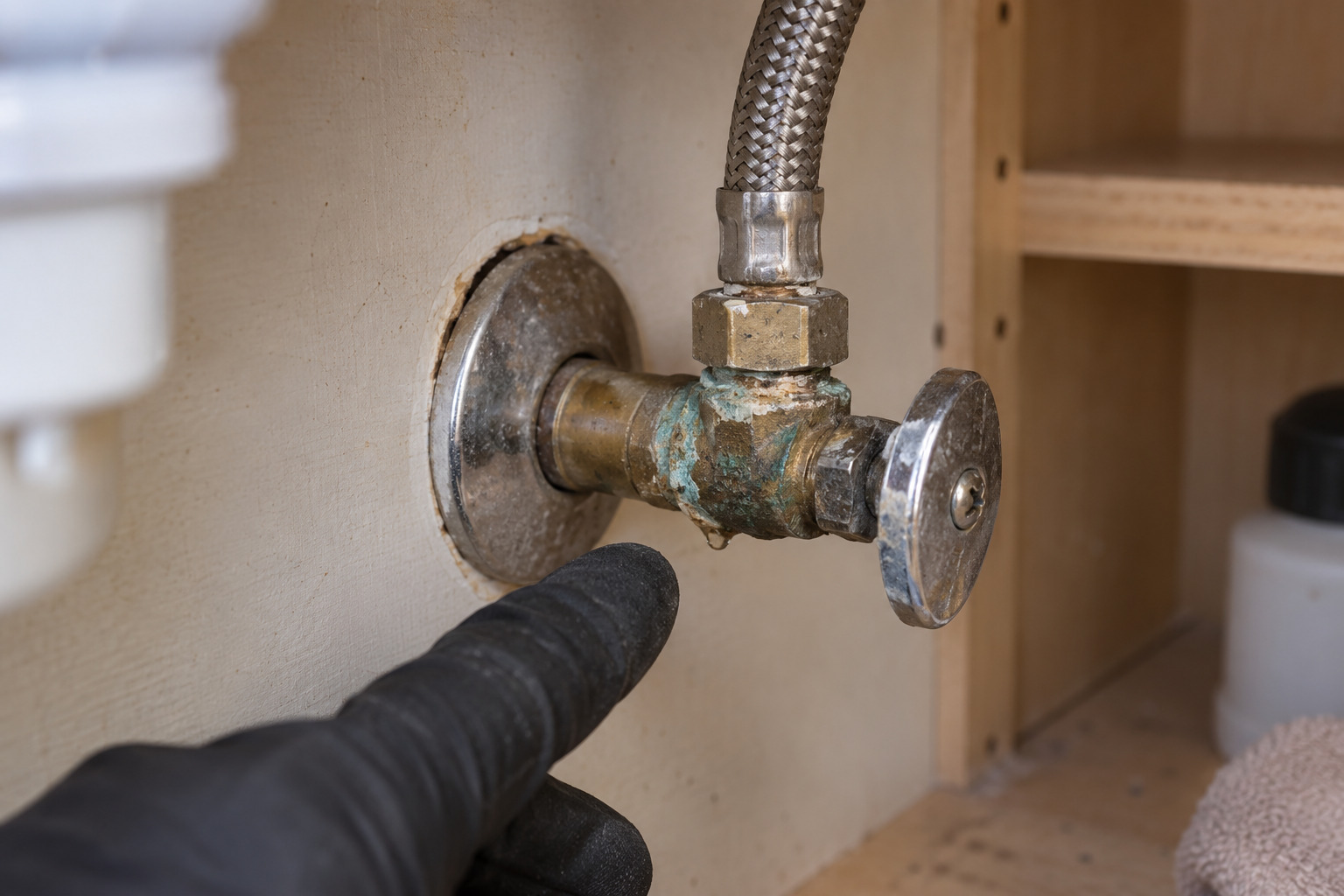
- Corroded angle stops. The angle stop is the small shutoff valve under each sink and toilet. When they’re green and crusty, inspectors flag them, and they’re cheap to swap.
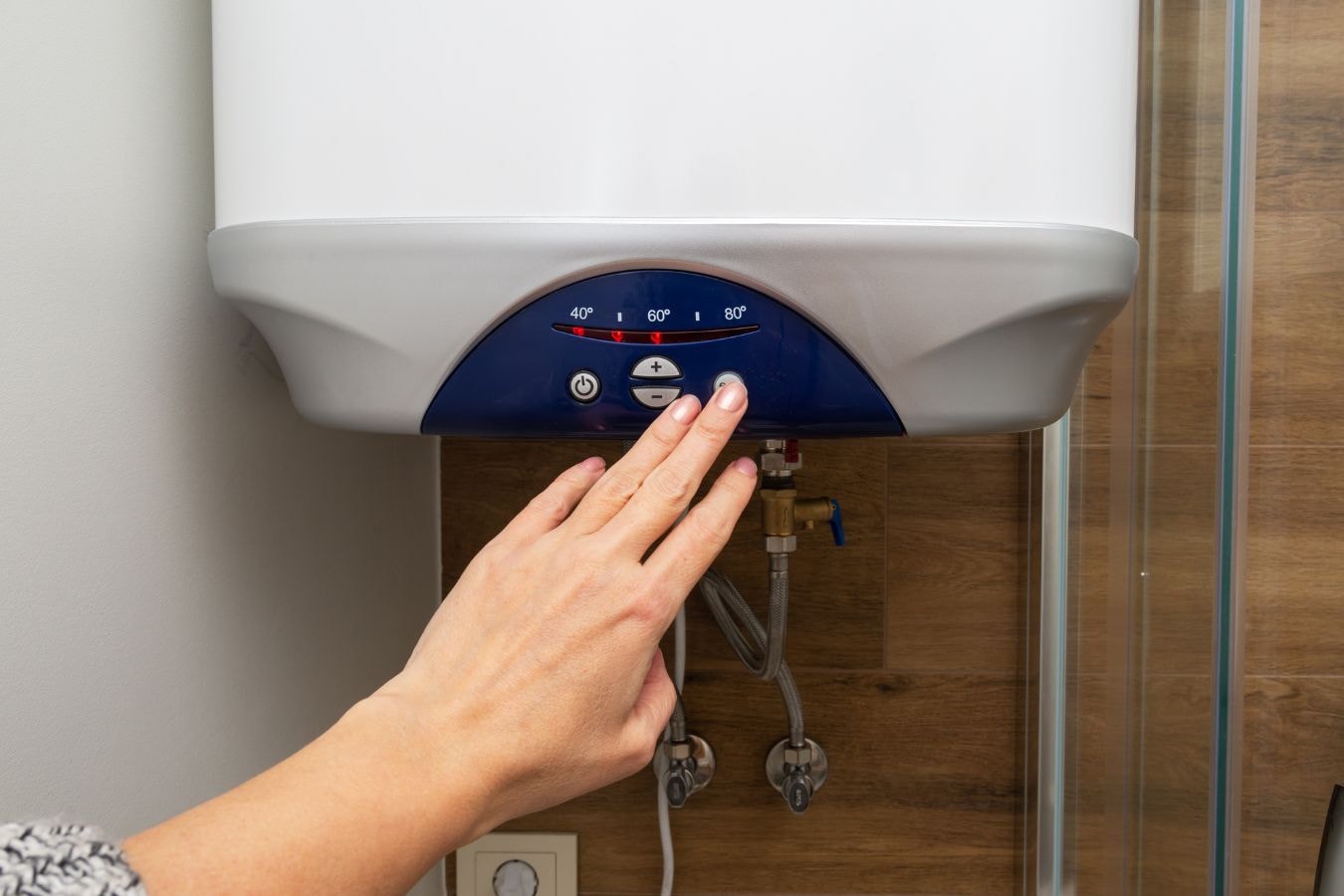
- A water heater with no expansion tank, or a rusted T&P discharge line. The T&P valve is the safety valve that releases pressure if the tank overheats. If its discharge pipe is corroded or terminates somewhere it shouldn’t, that’s a safety call-out, not a cosmetic one.
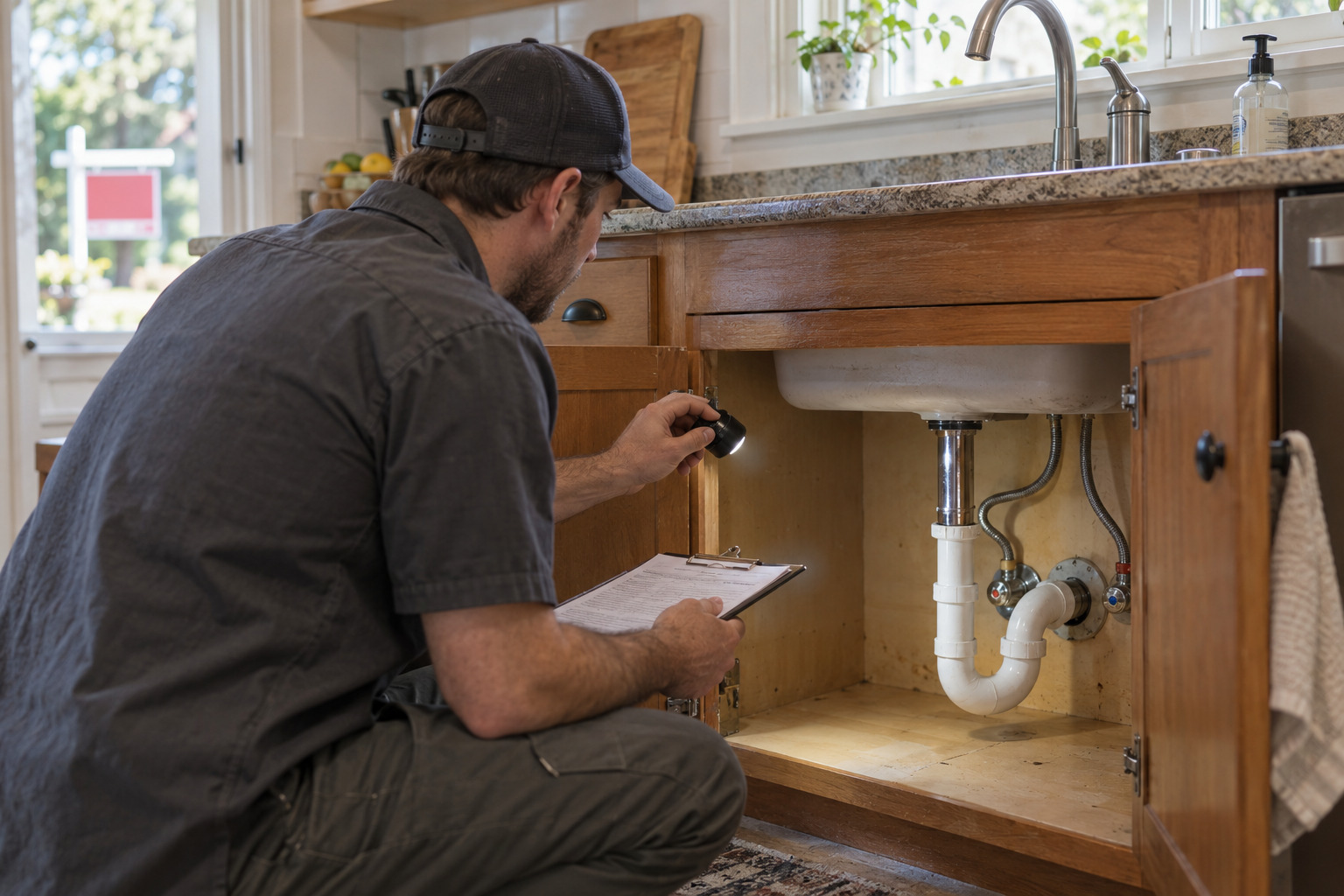
- Missing or improvised P-traps. The P-trap is the U-bend under a sink that holds water and blocks sewer gas. DIY vanity installs are where I find these missing. If a bathroom smells, this is usually why.
- Visible supply lines that are past due. Braided stainless lines to toilets and sinks are inexpensive and eliminate a whole category of inspector note.
- Hose bibs that drip or won’t shut. Exterior, obvious, and the first thing an inspector touches on the way in.
None of this is glamorous. All of it is the difference between an inspection report that reads “well maintained” and one that reads “deferred maintenance throughout.”
What should you skip?
Anything expensive, invisible, and speculative. This is where sellers burn money that never comes back, and it’s worth being blunt about which projects those are.
Skip the whole-house repipe if the house is functioning. A repipe on an older Grass Valley home runs into five figures and buyers do not pay a premium for it. They expect pipe to work. They don’t pay extra for new pipe the way they pay extra for a new kitchen.
Skip fixture and finish upgrades. New faucets, new vanities, new fixtures — the buyer has their own taste, and they discount yours. The remodeling data bears this out: NAR’s 2025 Remodeling Impact Report (April 2025) found the top cost-recovery projects were a steel front door at 100%, a closet renovation at 83%, and a fiberglass front door at 80%. Notice what isn’t on that list — or anywhere in the report. Plumbing systems aren’t measured as a value-add, because they aren’t one. Plumbing is a deal-preserver, not a deal-maker. That distinction should drive your entire budget.
Skip water treatment systems. If you’re on a well with hard water, a buyer will decide for themselves what they want. Disclose the water quality; don’t buy them a softener.
Skip anything that opens walls within a month of listing. A half-finished repair is worse than an honest disclosure. I’ve seen sellers start a repipe six weeks out, run into a surprise, and list with drywall patches and a story to tell. The story never helps.
Skipping these isn’t hiding them. These items don’t disappear — they get priced in, which is a normal and survivable part of selling a house. Priced-in beats half-finished every time.
What should you fix, document, and hand over?
There’s a third category most sellers never consider, and it isn’t really about the repair at all. Some items are worth handling because the paperwork closes a question before a buyer opens it. An open question gets negotiated. A closed one, with a dated receipt behind it, usually doesn’t.
Service the water heater and keep the invoice. If yours is over ten years old, ENERGY STAR recommends planning the replacement rather than waiting for failure. Replacement runs $882 to $1,825 for a standard tank, averaging $1,347 (Angi, 2026 data). Whether you replace it or just service it, a dated invoice answers the question before it’s asked — and maintaining equipment you own doesn’t create a problem you then have to disclose.
Find the paperwork on work already done. If you repiped five years ago, that invoice is an asset. Same goes for a main line replacement, a re-route, a water heater swap, a slab leak repair. Work you already paid for only counts if you can prove it, and “we replaced that in 2021, here’s the invoice” ends a conversation that would otherwise turn into a line item.
Gather your well and septic records, if the property has them. Pump-out receipts, service records, any monitoring paperwork. A buyer will ask, and these are records you already have — you’re organizing a folder, not commissioning an inspection.
The theme across all three: you’re not buying new information. You’re making the information you already own easy for a buyer to find, so it never becomes a question someone else gets to price.
The whole checklist, in one table
Does selling “as-is” get you out of disclosing plumbing problems in California?
No. This is the most expensive misunderstanding I run into, and it’s worth being precise about. “As-is” limits what you agree to repair. It does not limit what you have to say.
California Civil Code § 1102(c) states that “any waiver of the requirements of this article is void as against public policy,” and § 1102.1 confirms the Transfer Disclosure Statement may not be waived in an “as is” sale (California Civil Code § 1102 et seq.). You can decline to fix the thing. You cannot decline to disclose it.
That’s actually good news for the strategy in this article. If you’ve decided to skip the repipe, skipping it is fine — as long as you say so. The risk isn’t the old plumbing. It’s the gap between what you knew and what you wrote down.
"'As-is' just means you're not promising to fix it. It doesn't mean you get to stay quiet about it," says Mike Faulkenberry, a REALTOR® with Coldwell Banker Grass Roots Realty in Grass Valley. "In most California home sales, the seller's disclosure form can't be waived. The sellers who get burned usually aren't the ones with an old water heater. They're the ones who knew about a problem and left it off the form."
I’m a plumber, not your agent — how you handle the disclosure form is a conversation for the two of you. But from where I stand, the sellers who write it all down are the ones who don’t hear about it again after closing.
What will a buyer’s inspector flag in an older Grass Valley home?
Different things than they’d flag in a newer subdivision, which is why generic advice falls short here. Our housing stock is old, our soil moves, and a lot of properties are on wells and septic. Here’s what actually comes up.
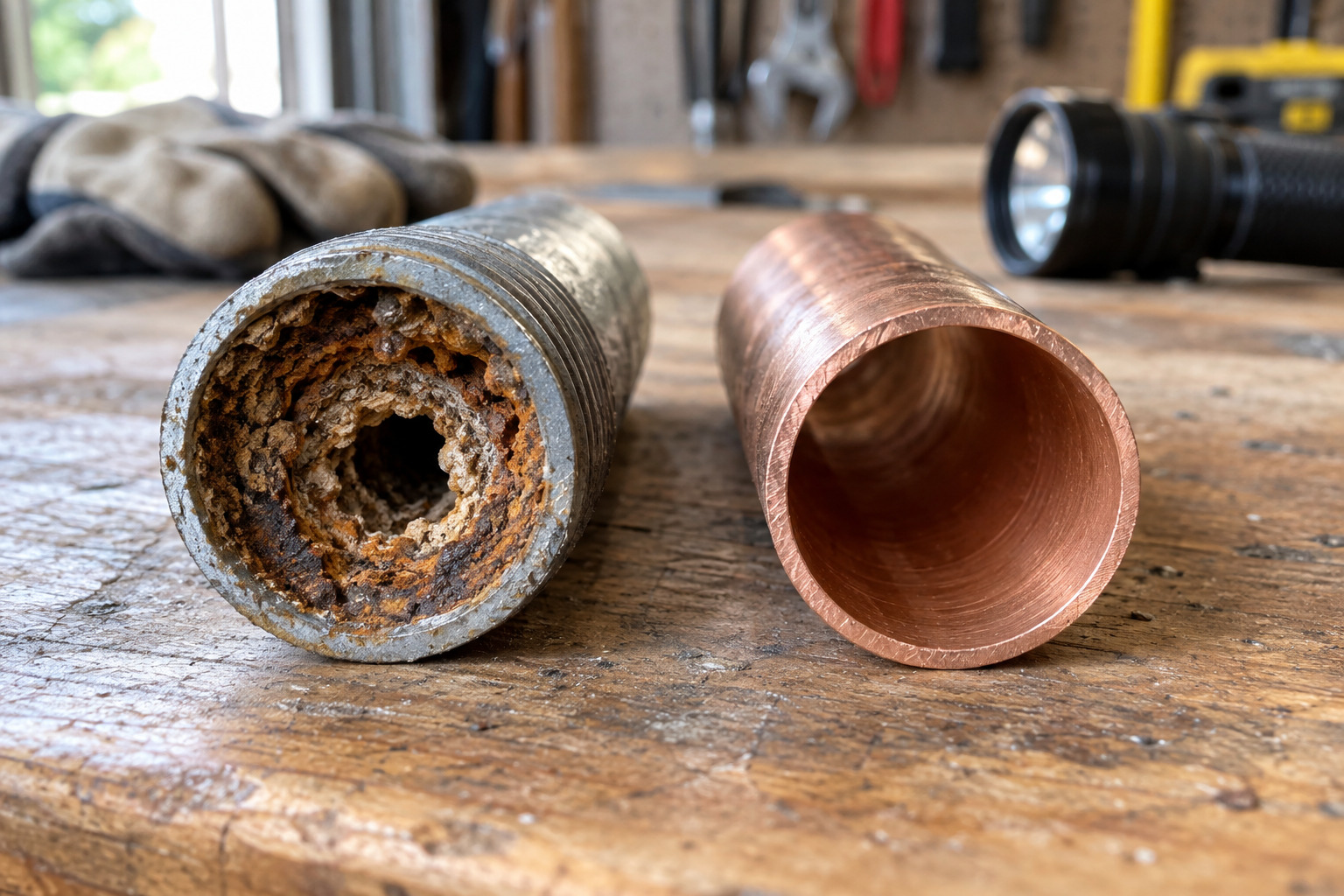
Galvanized supply lines. Homes built before the 1960s often still have them, and they corrode from the inside out. The tell isn’t a leak — it’s low pressure at the fixture farthest from the main, or rusty water after the house sits a few days. I wrote more about what older Grass Valley homes need if you want the longer version.
Sewer laterals with root intrusion. Mature trees and clay or cast-iron laterals are a predictable pairing, and this is the finding most likely to disrupt a sale here. On an older home, expect a buyer to take a look at the line.
Unpermitted work by a previous owner. Added bathrooms, converted garages, and basement sinks plumbed by somebody’s brother-in-law. Inspectors find these, and buyers’ lenders sometimes care.
Freeze-exposed lines. At our elevation, uninsulated crawlspace runs and exterior hose bibs on the north side get flagged, especially in a winter listing.
Wells and septic. If your property has them, they are separate scopes that a general home inspection does not cover, and a buyer will order them. Have your records ready.
Repair it, or credit it?
Repair it when the scope is bounded and cheap. Credit it when the scope is genuinely unknown. That’s the whole rule, and it works because a buyer will always bid an unknown higher than it would cost you to close it.
"Buyers don't price the repair. They price the unknown," Faulkenberry says. "A $600 fix with a receipt attached costs you $600. Leave that same problem open, and it shows up on the buyer's repair request at whatever number they imagine, which is almost always more. That's why I tell sellers to handle the small stuff before the sign goes in the yard."
One warning: don’t start work you can’t finish before photos. A bounded repair becomes an unbounded one the moment a wall is open, and there is no worse time to discover that than the week your listing goes live.
Frequently asked questions
Is a pre-listing inspection worth it?
Often, yes — especially on a home over forty years old. It costs a few hundred dollars and moves surprises from the buyer’s contingency period, where they’re leverage, to your prep period, where they’re just tasks. The tradeoff: in California, anything it finds becomes something you must disclose.
Do I have to disclose a plumbing problem I already fixed?
Generally yes — a repaired problem is still a known material fact, and the repair record is what protects you. Attach the invoice. Disclosing “slow drain, snaked March 2026, receipt attached” is a much better sentence than a buyer’s inspector discovering it themselves. Ask your agent about your specific situation.
Should I repipe before selling?
Usually not. A repipe on an older home runs into five figures, and buyers don’t pay a premium for pipe that works — they expect it. Disclose the pipe material, let it be priced in, and put the money toward the cheap visible repairs instead. Exception: if it’s actively failing.
Does a new water heater increase home value?
Not really — it removes an objection rather than adding value. Replacement averages $1,347 for a standard tank (Angi, 2026). If yours is past ten years, replacing or servicing it with a dated invoice is worth doing. Just don’t expect the sale price to move by what you spent.
Can I sell a house with a slab leak?
Yes, but you must disclose it. An as-is sale doesn’t waive California’s disclosure requirement. Get it diagnosed so you know the actual scope, then decide with your agent whether to repair, credit, or price it in. What you cannot do is leave it unmentioned.
Who pays for plumbing repairs after the inspection — buyer or seller?
It’s negotiated, not fixed. Buyers typically submit a request for repairs; sellers can repair, offer a credit, or decline. Sellers who documented their prep work going in tend to face shorter lists and smaller numbers, because fewer items are still open questions.
Before you call the photographer
Walk the house once with a notepad. Run every faucet, flush every toilet, look under every sink, and step outside and check the hose bibs. Most of what a buyer’s inspector will write up, you can find yourself in twenty minutes.
Fix the cheap things. Document the medium things. Disclose everything. That’s the entire strategy, and it’s cheaper than the alternative.
If you’d like a second set of eyes before you list, that’s the kind of walkthrough we do — a straight assessment of what’s worth fixing and what isn’t, including the things I’d tell you to leave alone. No gimmicks, just an honest read on your plumbing.
Principled Plumbing Inc. · 115 South Church St., Suite E, Grass Valley, CA 95945 · (530) 264-0464 · Plumber in Grass Valley
.png)